
Wasatch County Property Value Types
Reading Wasatch County property values gets simpler once each number carries its source and date. The Assessor's market value estimates fair market value as of Jan. 1. Taxable value can come in lower. That happens after a qualifying exemption. A deed's stated consideration belongs to one conveyance only. The county's tax lookup does not lay out a full sale-price inventory. Label every figure. Treat "value" as several distinct numbers, never one universal amount.
| Value | What It Is | Where |
|---|---|---|
| Assessor market value | Fair-market-value assessment as of Jan. 1 | Wasatch County Assessor |
| Taxable value | Tax base after an approved exemption or classification | Assessor roll; confirm exemption status |
| Recorded consideration | Amount tied to a particular transfer, if stated in the instrument | Recorder document; public tax result fields are not fully documented |
| Land and improvements | Parcel dataset includes land and total market-value fields | Utah SGID attributes; confirm the current assessor record |
The 100% fair-market-value standard describes the assessment level. It is not a promise that the estimate matches any buyer's price. A recorded consideration reflects a single transaction. It may carry terms no simple lookup reveals. A market appraisal stands apart as a professional opinion. Taxable value can diverge further when a residence or land-use exemption applies.
Wasatch Assessment Date and Roll
Wasatch County assesses real property at 100% of fair market value with a Jan. 1 lien date. The annual roll closes May 22, and valuation notices go out in July. That cycle frames every value record on the tax roll. A jump from one year to the next may signal revaluation, new construction, a parcel split, or a changed classification. It could also reflect an exemption change rather than a sale.
The Assessor's equity map adds comparison context. The tax roll remains the official assessed record. A pattern on the map can raise a question about comparable parcels. But it cannot replace a parcel review or an appraisal. Owners who dispute a valuation take it to the county's Board of Equalization between Aug. 1 and Sept. 15.
Exemptions Change Taxable Value
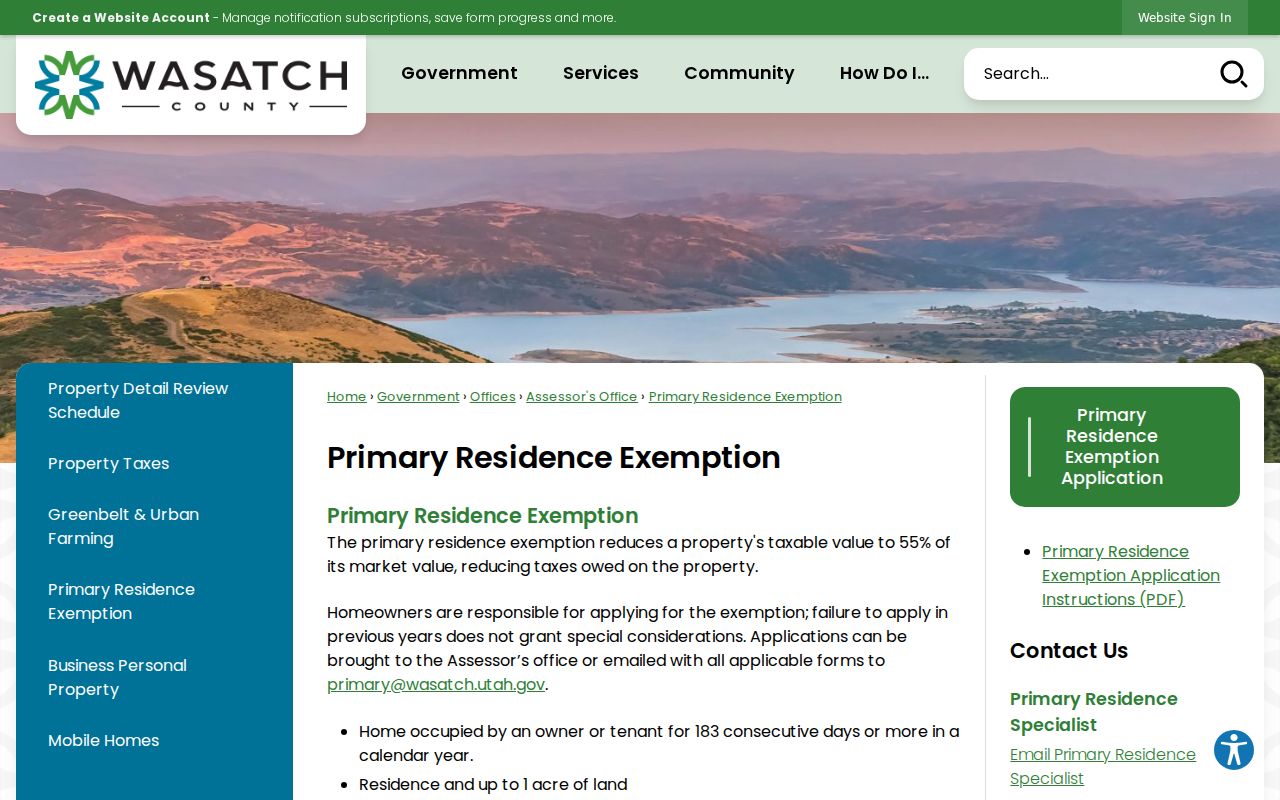
The primary-residence exemption drops taxable value to 55% of market value for owners meeting the 183-day occupancy rule. Sept. 15 is the application deadline. Greenbelt and urban-farming programs value qualifying land by its productive capacity under separate conditions. Every one of these classifications shapes the taxable base alone. The assessor's market value and the deed's ownership language stay untouched.
Never line up an exempt parcel's taxable value against a neighbor's market value. Check the tax year and exemption flag first. Confirm eligibility and filing status through the county's current application route.
Look Up a Wasatch County Value
The county's current-year tax lookup answers to an address, a parcel number, a serial number, or an owner name. Use the parcel or serial number when several properties share an address. It also works when a recent split has redrawn the map. Check the stated tax year before comparing any values. The public page carries 2024 reference data. It may trail a newer assessment or transaction.
- Search the Wasatch tax lookup by address or the parcel/serial key.
- Record the tax year and any market or taxable value field the current result actually shows.
- Check the exemption or property class before comparing tax amounts.
- For transfer evidence, inspect the Recorder instrument; for a sale opinion, obtain a qualified appraisal.
- Market value
- The assessor’s full-value estimate as of the Jan. 1 valuation date.
- Taxable value
- The amount used for tax after an approved exemption or classification.
- Recorded consideration
- A transfer amount stated in a recorded instrument, if available.
- Appraisal
- A separate professional opinion of value for a stated purpose.
Why a Wasatch Value Can Move
A sharp value change does not prove a sale. A lot split can move the record. So can new construction. A changed property class or a shifted exemption can shift it as well. So can the annual reassessment. Wasatch County has a long growth history, and its blend of agricultural, residential, and recreation parcels keeps shifting. That makes year and parcel context essential. Compare like property types, and check whether the map shows a new lot or improvement.
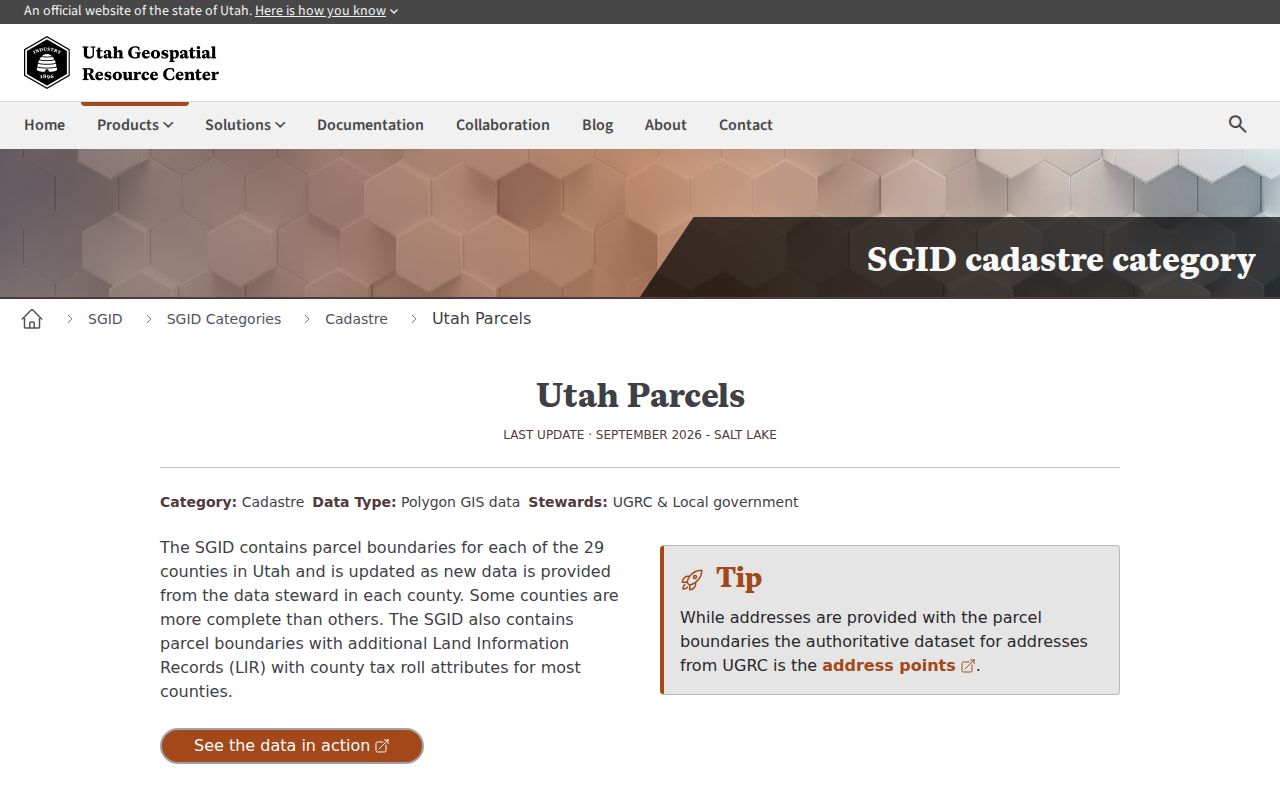
The statewide parcel dataset carries land market value and total market value fields. It also includes property class, acres, subdivision, building area, and year built where available. Those fields help with analysis. Confirm current assessed values with the Assessor. Inspect a downloaded layer's current-as-of metadata before relying on it. Dataset dates differ.
The Utah SGID parcel page reports a May 2026 update for basic Wasatch parcel data. It reports a 2024 update for the land-information-record feed. That gap can matter when comparing land and total market fields against a later county assessment. Treat a downloaded row as a cross-reference. It is no substitute for asking the Assessor which value sits on the current roll.
Wasatch Sale Price Evidence
A recorded deed documents a transfer. But the public tax lookup does not display a last-sale amount or a complete transaction card. When a recorded consideration is the question, go to the deed and the Recorder reference. Use the county's official channels for any record images.
One sale is not a universal measure of present value. It may involve unusual conditions or precede later work on the parcel. The assessor's annual market estimate answers one question. The deed's transfer details answer another. A current appraisal answers a third. Never substitute a Census housing statistic for a specific parcel's value.
Park City Value Context
Park City sits partly outside Wasatch County, so context matters. The Census QuickFacts page lists a 2020-2024 median owner-occupied housing value. The figure is $1,757,800 for the city. That figure is a citywide Census measure, nothing more. It is not the assessed value, taxable value, sale price, or appraisal of any Wasatch parcel. It should never be applied to a single property search or tax bill comparison.
The county line runs through Park City. Only a small portion falls inside Wasatch County, according to the draft general plan. Confirm a parcel's jurisdiction before weighing any assessor value or exemption. A citywide statistic cannot tell you which Recorder or Assessor holds a given deed. It also cannot tell you which office keeps the tax account.
Limits of a Wasatch Assessed Value
An assessor's number answers one question: what value drives the tax roll. It is not an asking price. It does not promise a sale result. The Wasatch County assessed market value reflects a Jan. 1 date and may lag current conditions, while the taxable value may also reflect an exemption. A sale price belongs to one specific transfer. An appraisal is a professional estimate prepared for its own intended use.
Label every figure with its source and year. An assessor value sits on the annual roll. A tax bill reflects the taxable base plus rates set by the taxing entities. A deed's stated consideration covers a single recorded conveyance. The Park City Census statistic is a five-year citywide housing measure. The county's lookup labels its data 2024, and the SGID feed carries its own update dates. Strip away those labels and two perfectly consistent numbers can look like a contradiction. That happens simply because they describe different dates or different purposes.
Compare like with like. For two Wasatch parcels, match both full market values from the same assessment year. Or match both taxable values after checking the primary-residence or land-use classification. A gap in acres, building square feet, year built, or parcel class can explain a broad contrast in SGID or assessor data. Those fields still say nothing about condition or every feature shaping a sale. If the question is the tax amount, turn to the Clerk/Auditor rate process and the Treasurer bill. If it is an asking or offer decision, the assessor record is not a valuation opinion.
Value vs price. Wasatch County assessed value is used for tax purposes and does not predict what a property will sell for. Use a qualified appraisal for a property decision that requires a current market opinion.